In marketing, a minimum viable product has its time and place—or, let’s be honest, lots of times and places.
Marketing automation isn’t one of them.
Marketing automation looks different for every business, but one thing is true across the board: it’s not something you can do by the seat of your pants.
To reap the benefits of marketing automation, “you definitely have to be thoughtful,” advises Sean Donahue, director of email marketing at the nationally recognised digital marketing agency Power Digital.
Before you start getting stuck in and setting up your automations, here’s what to keep in mind when choosing marketing automation technology and defining your marketing automation strategy.
Why experts say you need a single source of data truth, ASAP
When evaluating your marketing automation technology options, experts agree that one consideration should be paramount above all others: data integration.
“That’s definitely the big one,” says Heather Browne, director of performance marketing at leading digital customer experience company Blue Acorn iCi. “If you don’t have the data, it’s all worthless.”
If you don’t have the data, it’s all worthless.
“Most marketing platforms provide great one-click integrations for ecommerce platforms, but it’s critical to understand which vendors and partners a brand works with and how much effort it’s going to take to get that data into the platform,” Donahue agrees. “The biggest challenge is getting your data in place and making sure you have what you need set up ahead of time.”
That’s because high-quality SMS and email marketing automation depends largely on high-quality data, and on how sophisticated the technology is that gives you access to it. It’s not just about understanding your audience as a whole—it’s also about understanding different groups, or segments, of customers and potential customers, based on:
- Demographics such as where they’re located and how old they are
- What they’ve bought, or almost bought
- How they’re engaging with your emails, texts, and website
- The shopping and personal preferences they’ve shared with you
- …and more
Donahue calls it “smart data”: largely behavioural data that’s clean, stored in a consistent format, and as up to date as possible.
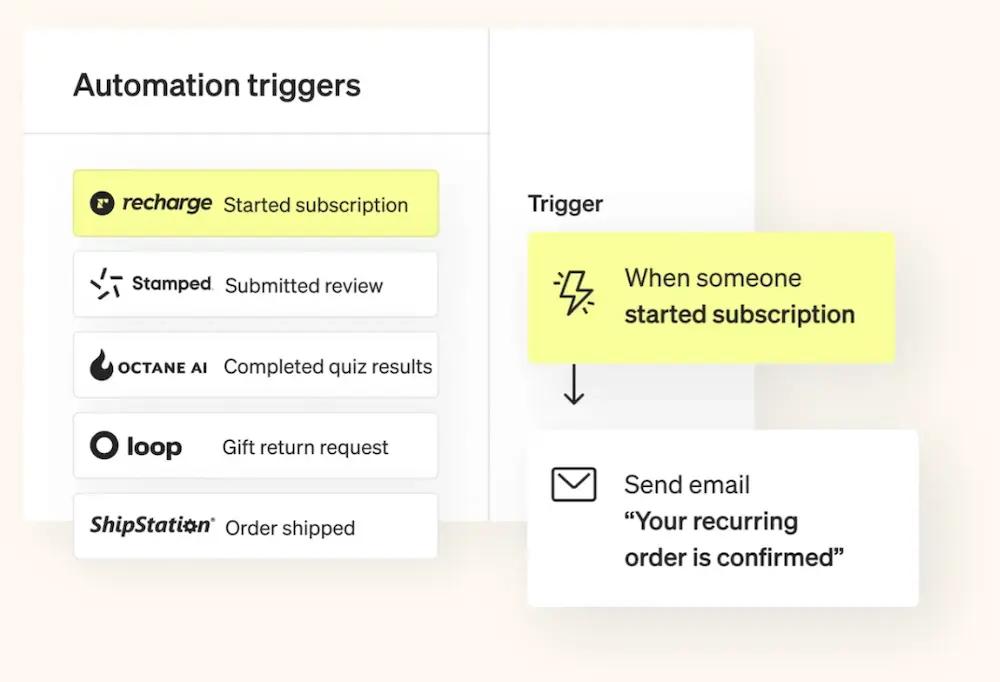
“With marketing automation, the event triggering and the message launching are all happening in near real time,” he explains. “You need to make sure that data is there to back that up.”
Whether it’s your shipping platform, your order management system, your customer relationship management tool (CRM software), your project management system, your helpdesk provider, or all of the above plus more, it’s absolutely critical to make sure your marketing automation platform integrates seamlessly with the rest of your tech stack.
The data drives everything.
“The data drives everything,” Donahue emphasises. “Your personalisation, your recommendations, I mean, you name it for content within a message, it’s all being delivered based on the data being sent to the platform.”
How smart data drives sophisticated segmentation in Klaviyo
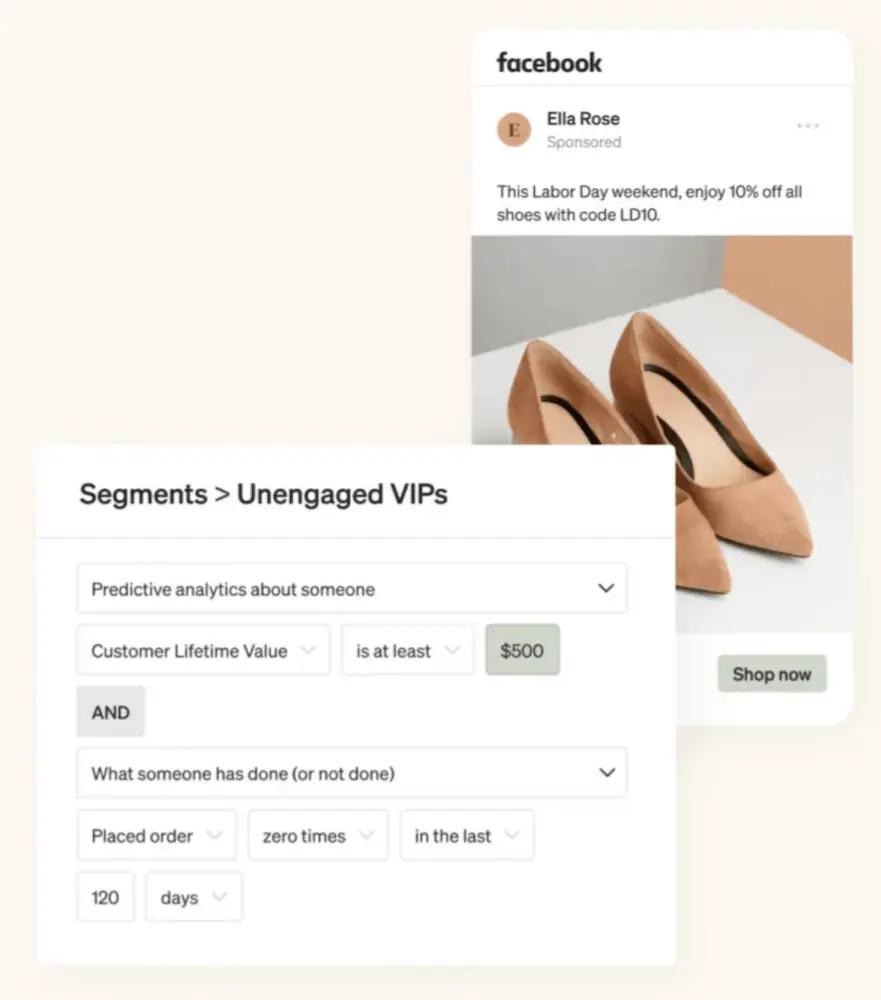
Klaviyo’s 350+ pre-built integrations work seamlessly with the tools you use to run your business every day. And Chris Gordon, head of client success at leading ecommerce and marketing agency Noticed, calls them “rock-solid”—they’re what enables the marketing automation solution’s “really, really strong segmentation capabilities,” he says.
“They allow you to segment based on all the data points you’d want—any kind of data that comes directly from engagement with your marketing, but also any of the platforms you’re using,” Gordon explains. “We can get incredibly granular with it.”
Gordon cites a client that sells sports caps to explain the importance of smart data when it comes to not alienating customers. “Let’s say you’ve bought or viewed Yankees products in the past and the Yankees have just won the World Series — we’ll send you this celebratory email,” he explains. “If you’ve bought or viewed Red Sox items in the past, we will not send you that email.”
Browne and her Blue Acorn iCi colleague Lindsey Murray, VP of performance marketing, recall one project involving customers in 13 different locations, where “every flow we created had 13 variations of language and currency,” Murray says (“flow” is Klaviyo’s word for “automation”). “It involved a lot of conditional splits, with many show-and-hide-type blocks based on profile variables.”
In Klaviyo, you can split based on just about anything you can think of. The sky is really the limit.
Those variables included everything from the basics, such as whether or not someone was subscribed to email and SMS, to populating specific content based on a customer’s postcode or past purchasing behaviour, to delivering different welcome emails depending on whether a customer signed up in-store or online.
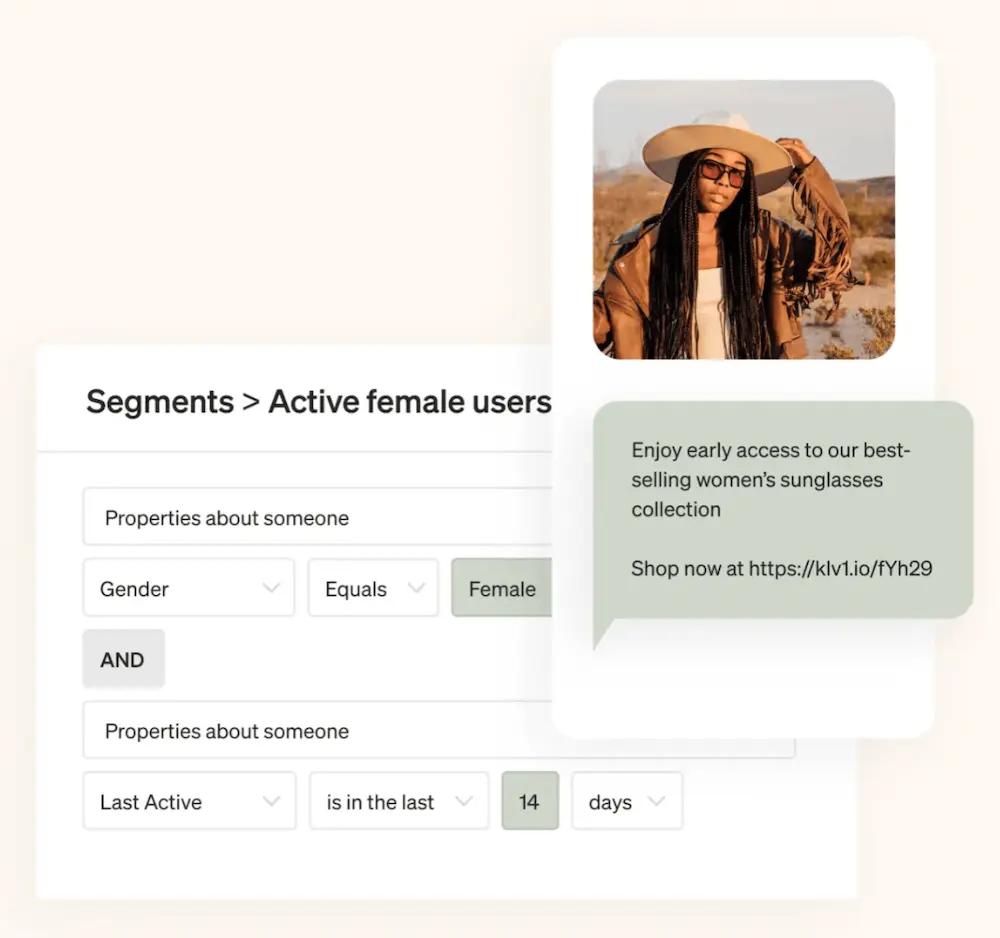
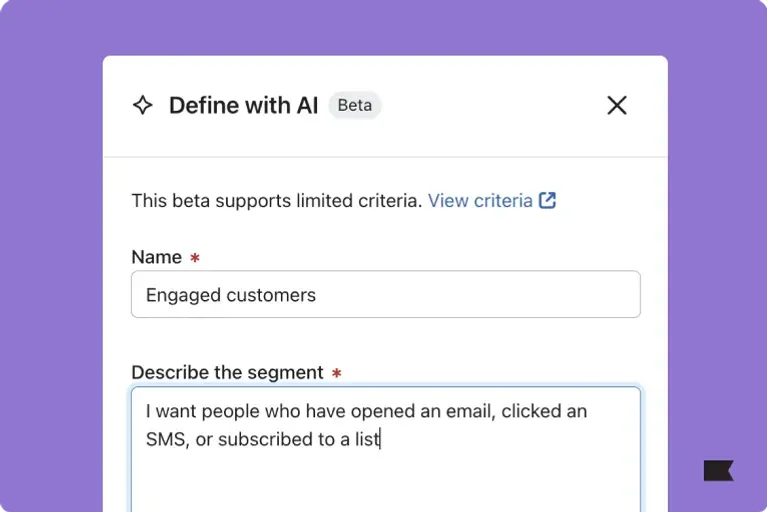
In Klaviyo, “you can split based on just about anything you can think of,” Gordon says. “The sky is really the limit. You can just keep getting more and more granular as long as it makes sense, and as long as there are enough customers in that segment of people to make the juice worth the squeeze.”
Can’t you just mix and match different point solutions?
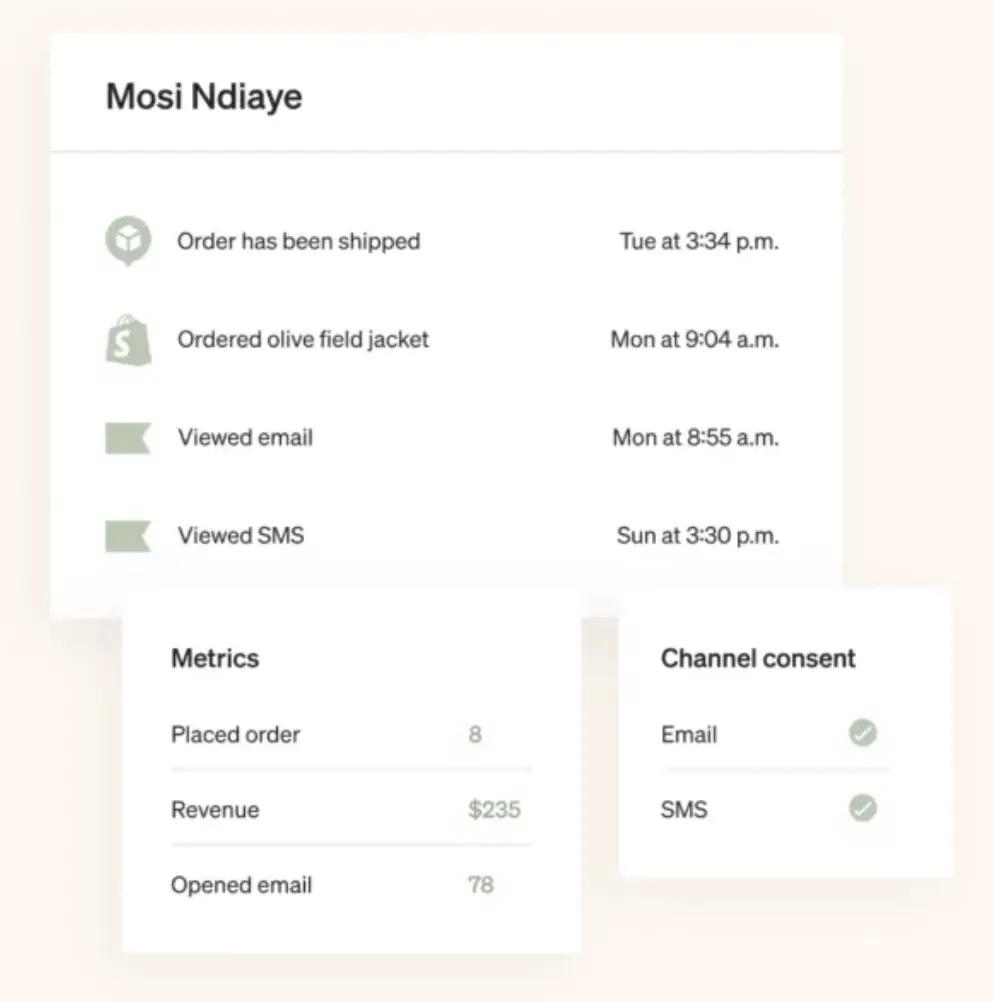
Not really. A good marketing automation tool not only collects all this data, but also stores it in one place for easy access—allowing you to develop a complex, 360-degree view of each customer that evolves over time alongside their wants, needs, and behaviours.
If your marketing automation software’s data integrations aren’t up to that kind of task, Murray cautions, “make sure you have a development team or a tech team that’s going to be able to support you in that role.”
Without a platform like Klaviyo, which stores all your customer data in the same place as your email and SMS automations, “it would be really difficult to personalise and automate messaging specific to each customer,” Murray explains. “Otherwise you’re dealing with all this disparate data and trying to export different lists of people who meet certain criteria, and it’s just a nightmare.”
The whole point of marketing automation is you don’t have to focus on those repetitive tasks. You get to focus on what actually moves the needle.
“You achieve so little just to keep the lights on,” Murray adds. “And then you spend all your time doing things that are mindless. The whole point of marketing automation is that you don’t have to focus on those repetitive tasks. You get to focus on what actually moves the needle.”
9 questions for evaluating marketing automation technology
Beyond data integrations, Donahue encourages marketers to ask themselves a few other questions when selecting the right marketing automation technology for their business:
How complex is our marketing programme?
“It’s important to understand the status of your lifecycle marketing programme,” Donahue advises. “What level of personalisation are you hoping to achieve? Will you utilise the platform to its full extent? Do you have the data available to leverage every area of the platform effectively?”
Do you have the data available to leverage every area of the platform effectively?
If you’re looking to greatly expand your reach in the next 12 months and therefore investing heavily in lifecycle marketing, for example, you’ll need to “ensure that there’s enough functionality and accommodation for greater complexity of automation, alongside data mapping that matches your customer data platform (CDP) or back-end schema,” Donahue suggests.
Think carefully as well about which marketing automation features you can’t do without. These might include:
- Segmentation-based marketing
- Behaviour-triggered marketing
- Email and SMS on one platform
- Sign-up forms
- Dynamic content personalisation
- Automated A/B testing
The key, Donahue says, is to “find a platform that meets you where you are, with some headroom to grow.” In other words: “Don’t buy a Ferrari if you’re only planning on doing laps around the car park.”
Don’t buy a Ferrari if you’re only planning on doing laps around the parking lot.
What kind of reporting capabilities do we need?
“Finding a platform that has great out-of-the-box reporting metrics and charts is key for most brands,” Donahue points out. But beyond that, reporting needs can vary drastically from business to business.
Think about what, specifically, you’re trying to accomplish, Donahue advises. Do you just need to pull metrics for a marketing manager to make quick business decisions? Or are you introducing a data intelligence team that needs to drill down into each KPI?
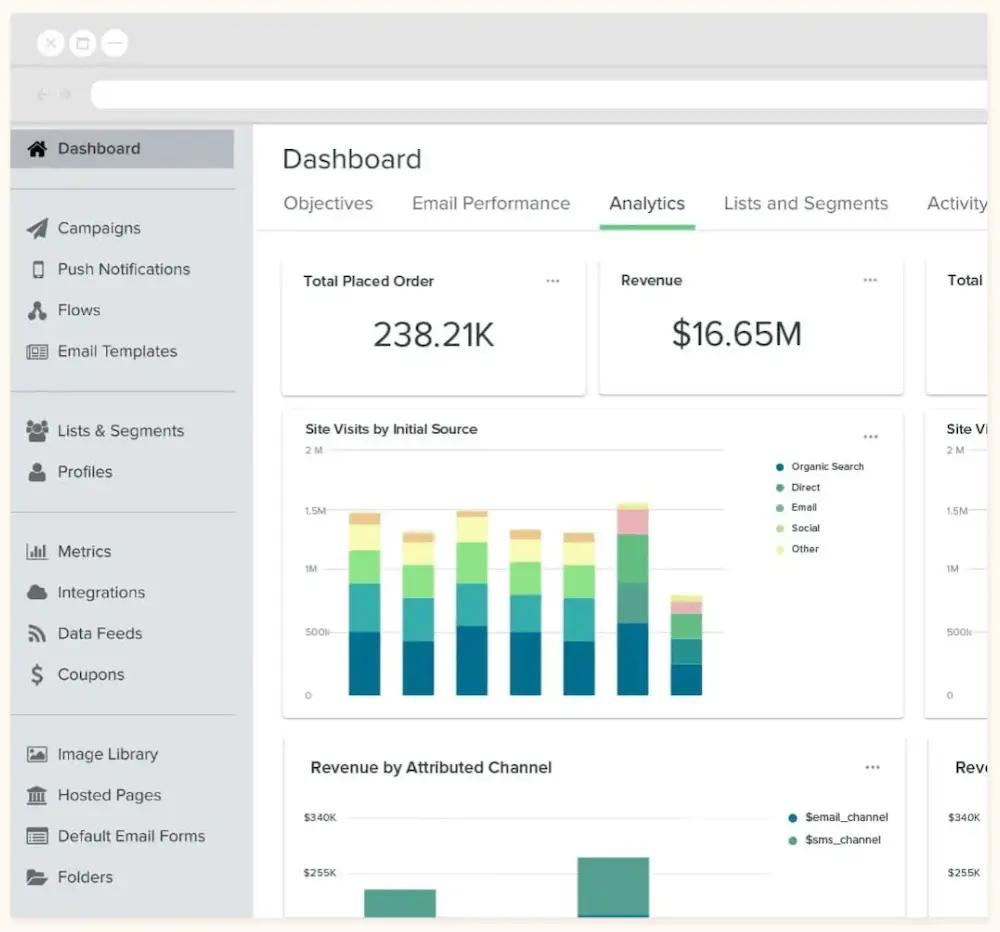
Whatever your reporting goals, your marketing automation platform should be able to help you achieve them.
What’s our budget?
This one’s “probably the simplest to measure a match,” Donahue says, but that doesn’t make it any less important.
Does your budget align with the platform? What’s the fee structure like? Is flexible pricing important to you? What commitment periods do you need to be aware of?
+ a few other questions worth asking yourself
- What vertical are we in?
- What does our product look like?
- Am I looking to integrate SMS, a CDP, and/or customer reviews?
- How big are my lists?
- What’s most important to us? This might include:
- Ease of implementation
- Customisability
- Low learning curve
- Ability to scale as your business grows
- All of the above
- How’s the customer support?
The 3 components of an effective marketing automation strategy
Of course, technology is only half of the marketing automation equation. Ideally, the data is what gives you insights about your customers, and the technology is what helps it all make sense.
Once you have a solid understanding of your various target audience segments, though, you also need to ask:
- What messages should I send?
- Which customers should receive those messages?
- Under which circumstances, and when?
With that in mind, here are three crucial steps to take when determining your marketing automation strategy:
1. Define your marketing automation goals
The biggest challenge in marketing automation, Gordon says, “is trying to prioritise your goals and figure out what’s most important for you as a company.”
Are you trying to boost customer lifetime value (CLTV)? Acquire new customers via inbound marketing? Improve lead generation, lead nurturing, and lead management in general? Increase up- and cross-sales? Enhance customer satisfaction?
You need to set a target somewhere and determine how to get there.
Donahue emphasises the importance of building a “goal-aligned plan” so that you understand everything you need to implement in order to reach your business objectives.
If your goal is simply to increase revenue, for example, you might start with automations that target big spenders, or basic automations, such as abandoned basket, that are proven to drive very high conversion rates.
If your goal is to nurture and strengthen your relationships with your most loyal customers, on the other hand, you might look into SMS automations that make subscribers feel like VIPs.
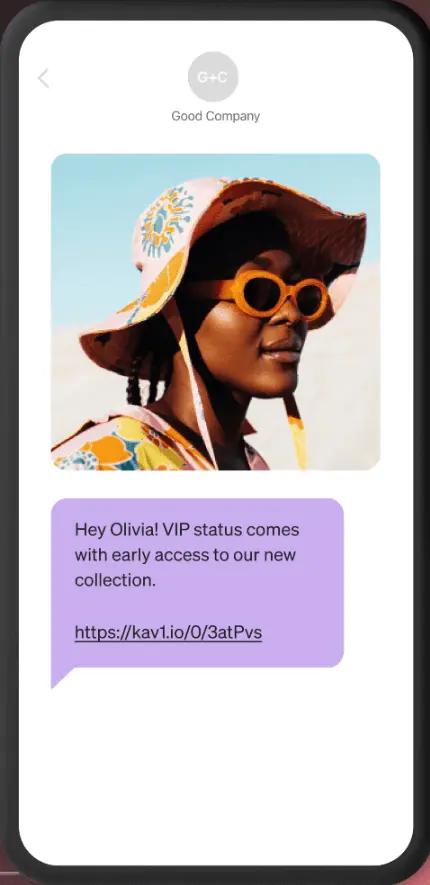
“Consideration No. 1 is simply, ‘Where do we want to be?’ You need to set a target somewhere and work out how to get there,” Donahue points out.
2. Collaborate with other teams
Marketing automation shouldn’t live exclusively with your marketing team. Your sales team, IT team, developers, customer support staff, and creatives should all be on board with your automation strategy.
“Think about some of the teams within the company you’re working for,” Murray advises. “What kind of input do you need from them? If there are any automations based on contacts to your customer service team after product receipt, for example, you’re going to want to loop them in.”
It’s hard to create some of these journeys and automations when you don’t know how to talk to your customers.
Your creative team, meanwhile, can help you optimise your content for UX and make sure it’s on-brand.
“Back in the day, we worked with some smaller brands that really hadn’t established their voice and tone,” Browne recalls. “Honestly, it’s hard to create some of these journeys and automations when you don’t know how to talk to your customers.”
3. Use product journeys to map content strategy to customer lifecycles
Speaking of the customer journey: Creating marketing content and personalised experiences mapped to each trigger event is where the heaviest up-front effort of marketing automation comes in.
Of course, this requires understanding your own products—and the various buyer’s journeys that could lead a consumer to purchase them.
The key to getting this step right is to think like a customer. Identify which customer touchpoints would benefit most from automation, then develop the communications and marketing processes that have the greatest potential to guide customers smoothly between those touchpoints.
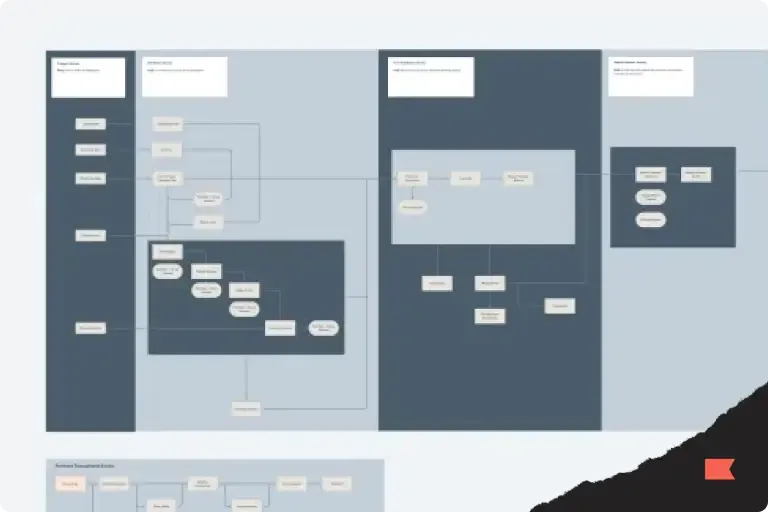
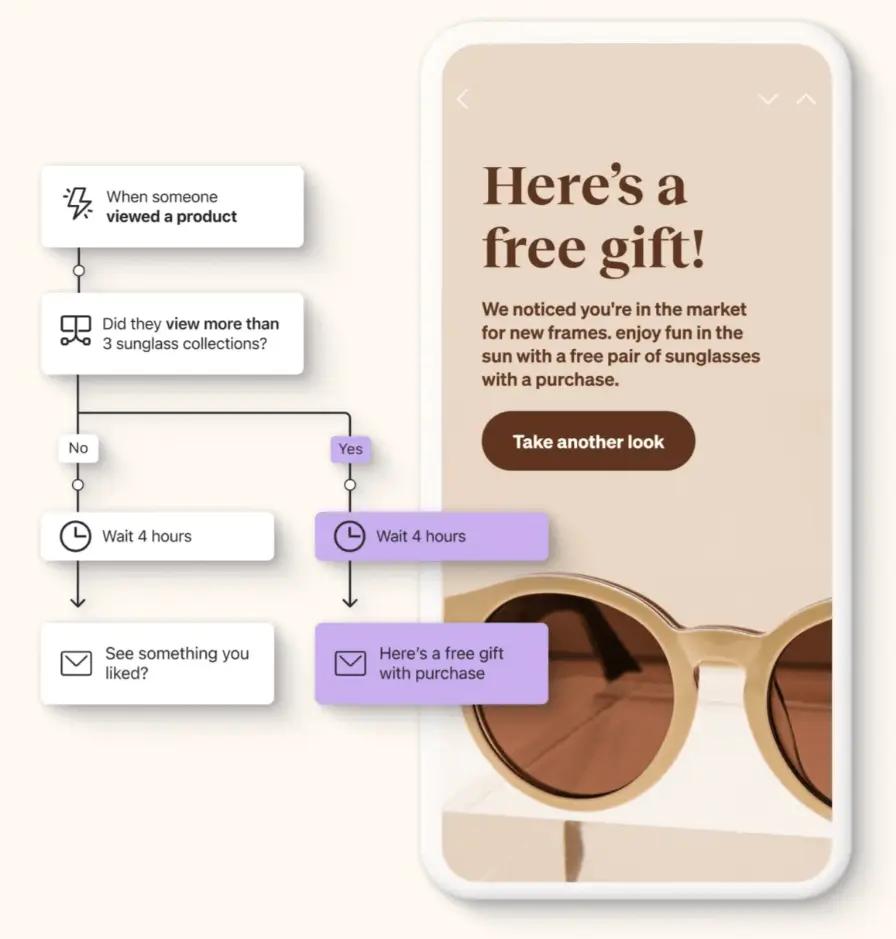
One way to get this right is by using if-then flowcharts for various trigger events. When mapping this out, experts recommend considering factors such as average order value and number of SKUs. Here are a few examples:
- If you sell replenishable consumer-packaged goods,“you need to understand the typical timelines between ordering and replacing that item, so that you know when to trigger a reminder email to repurchase,” Murray says.
- If you sell high-ticket items, consider building product-specific automations for your top performers. Here, Gordon points to mattress company and Noticed/Klaviyo client Layla Sleep, whose two hero products come in at around £1.5K. “Each one of those purchases is a huge, huge deal every time that sale comes through,” Gordon says. “That makes it worth putting in the time and effort to build product-specific abandoned cart flows.”
- If you have a high number of SKUs, stick to the basics. Consider a company that sells Mustang parts with incredibly granular fitments: In a case like this, where the number of SKUs could be in the hundreds of thousands, “you’d probably be better off taking an overarching category-based approach” to marketing automation, Gordon says—category-broad abandoned carts, for example, for cars vs. rims vs. engines.
Learn about creative ways to maximize your marketing automation efforts—and keep customers feeling seen and satisfied over time.
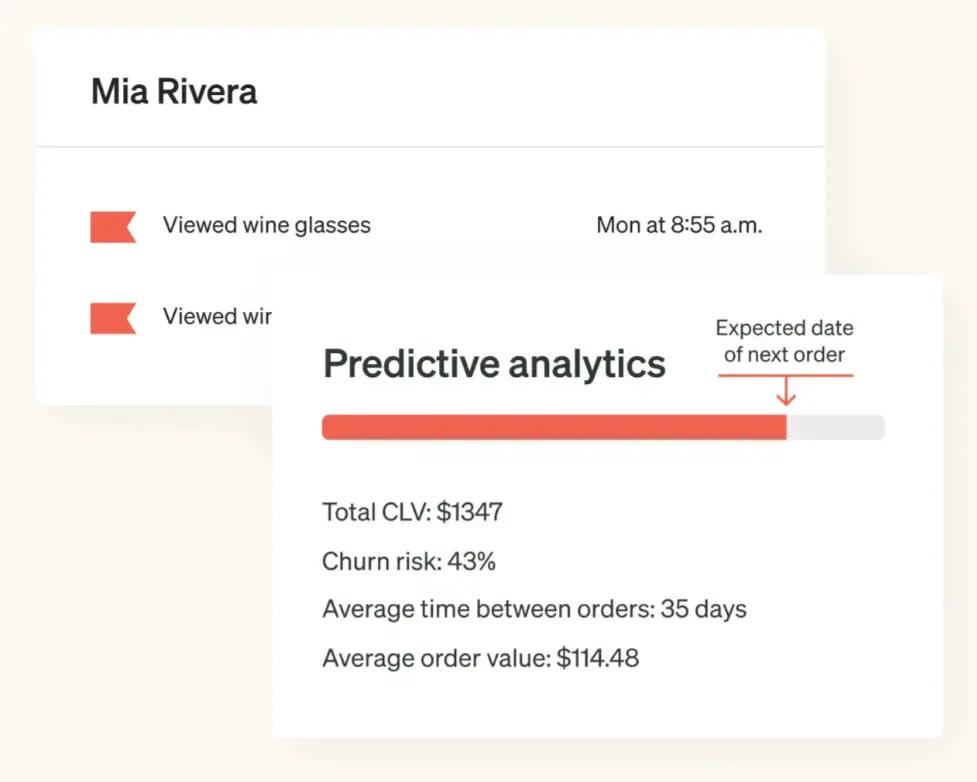
Read full storyAI, machine learning, and predictive intelligence can help here too, Murray adds. Klaviyo, for example, can estimate important dates for you, such as when a customer is most likely to purchase again, when they’re likely to lapse, and more—and help you develop an automation strategy that keeps your brand top of mind at the most opportune moment possible.
Overall, know your audience. If a customer has just spent £2,000 on a mattress or a waterproof winter coat, don’t follow up with a similar mattress or waterproof winter coat.
“That’s where you can get into ‘complete your set-up’ kind of stuff,” Gordon says. “You bought the mattress, now get the sheets, get the pillows. You bought the camping chair, but you don’t have the table, you don’t have the camp bed, you don’t have the full experience.”
“You don’t want it to be one size fits all,” Murray agrees. “Those types of ‘You may also like’ cross-sells should vary for every client and every product.”
You don’t want it to be one size fits all.
Or skip the cross-sell altogether. There are some industries and business models where it doesn’t make sense at all, warns Gordon—for example, a company that sells only wiper blades.
“That’s something you only need every two years or so, so they have a really long customer win-back timeframe,” Gordon points out. “Unless the product is faulty or the customer has a second vehicle, there’s not really a post-purchase opportunity there once someone buys.”
Want to go beyond marketing automation strategy? In this series, we cover everything you need to know about building and executing a smart, effective marketing automation strategy. Check out:
- Why marketing automation that prioritises personalisation is non-negotiable
- Marketing automation examples that go beyond the basics
- Marketing automation KPIs for measuring and optimising your marketing efforts
Power smarter digital relationships with Klaviyo SMS
Get startedMarketing automation strategy FAQs
How to get started with marketing automation?
The first step in getting started with marketing automation is to develop a blueprint for your marketing automation strategy. This process involves defining your marketing automation goals, collaborating with cross-functional teams beyond marketing, and using product journeys to map content strategy to customer lifecycles.
How to implement marketing automation?
To implement marketing automation, you first need to select the right marketing automation technology for your business. When choosing marketing automation technology, make sure it offers robust data integrations and the kind of reporting capabilities you require, and that it matches the complexity of your marketing programme and your budget.
What technologies are used for marketing automation?
High-quality marketing automation depends largely on high-quality data, and on the sophistication of the technology that gives you access to it. Klaviyo draws on your audience’s historical and real-time data from multiple integrated sources, streamlining workflows and maximising your team’s efficiency while also helping you understand what truly matters to your customers. In turn, it enables you to present more relevant content to them, precisely when they’re most likely to act on it.

Related content