Marketing automation works best when you think of it as an ecosystem.
That’s the advice Chris Gordon, head of client success at leading ecommerce and marketing agency Noticed, shares with his clients. “The way you build content into your flows can help feed the machine of the other flows,” he says. “They all kind of support each other.”
Here’s an example: A shopper views a few products on your website but doesn’t add any to their basket or start the checkout process. So they receive a browse abandonment email that shows them personalised product recommendations based on the products they were browsing earlier, because “maybe they were looking for something similar but not quite,” Gordon points out.
The way you build content into your flows can help feed the machine of the other flows.
The browse abandonment email leads the shopper back to the site, and this time they place an item in their shopping basket. But they still don’t check out. Maybe they get distracted by a phone call, or maybe they just need to see the product again. A few hours later, they receive an abandoned basket email, and that’s what finally drives them to purchase.
A few weeks after their purchase, once the product has been delivered and the customer has had a chance to experience it, they receive a thank-you email offering a discount or free gift in exchange for leaving a review. Later, that customer review is used as social proof in the welcome email that introduces other new customers to the brand.
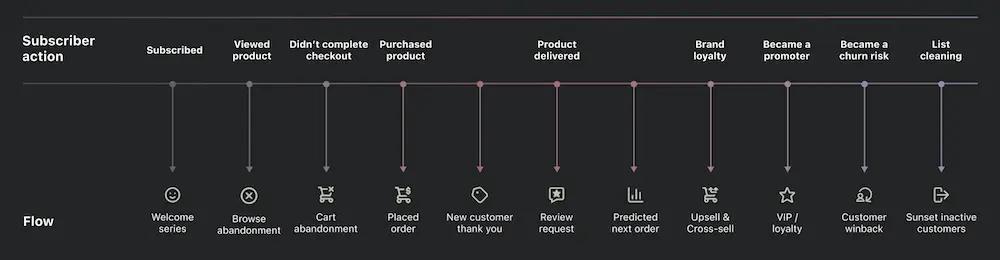
All of this allows a marketing automation platform like Klaviyo to collect the kind of zero- and first-party data necessary to create personalised experiences and drive smarter, more engaging customer relationships over time, Gordon points out.
“Every time a customer reaches a product page, Klaviyo collects that data, giving us the opportunity to follow up with another flow and continue bringing the customer further down the funnel to a product that they might be more interested in,” Gordon explains.
Here are a few ways you can maximise your marketing automation efforts to “feed the machine”, as Gordon says — and keep customers feeling seen and satisfied over time.
1. Up- and cross-sell automations
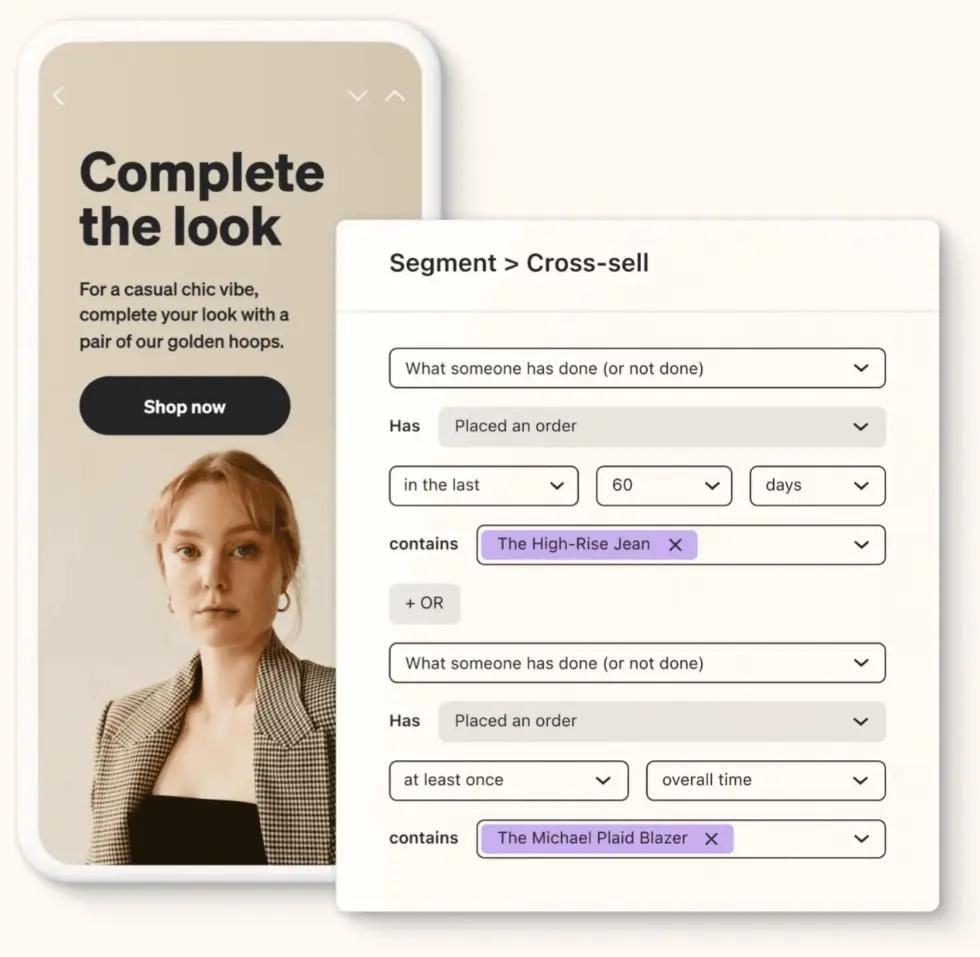
This might mean a “category affinity” email or text—“an after-the-fact cross-sell where we look at whether this customer has made multiple purchases from this category in X number of weeks or months,” Gordon explains. “Then, we identify them as a customer who is into that type of product and would be interested in purchasing variants on that product.”
An upsell or cross-sell automation might also fall into the realm of “complete the set-up”, Gordon says, which is more about showing shoppers products in different categories that may complement what they already have.
It’s now right in front of them—the opportunity is presented. Big revenue driver there.
Either way, the success of this type of automation depends entirely on the quality of your integrations and your data.
“I might know that if someone buys this kind of T-shirt, they’re more likely to buy this kind of hat,” explains Sean Donahue, director of email marketing at nationally recognised digital marketing agency Power Digital.
“So somebody’s already purchased, but now I’m showing them this other product that maybe they hadn’t thought of,” Donahue adds. “It’s now right in front of them—the opportunity is presented. Big revenue driver there.”
Pro tip: Don’t underestimate the power of the bounce-back buy, Gordon advises.
“Sometimes it makes sense to offer other shopping opportunities shortly after the initial purchase,” he suggests. “I’m not personally someone who buys something online and then buys something again straight away, but it happens all the time, especially if you offer free delivery.”
Those are typically top performers for the brands we set them up for.
As long as you have the data to prove it’s something your customers want, “those kinds of upsell opportunities, even right after someone has already bought, can be very important,” Gordon says. “Those are typically top performers for the brands we set them up for.”
Visit our help centre to learn how to create an upsell or cross-sell flow in Klaviyo.
2. “Fake loyalty” automations
If you use sign-up forms or quizzes on your website to gather zero-party customer data, you can ask subscribers to share their birthdays—and set up emails or text messages to be sent automatically when the date arrives, offering a birthday discount or free gift, or simply acknowledging the occasion.
Heather Browne, director of performance marketing at leading digital customer experience company Blue Acorn iCi, calls these kinds of automations “faux loyalty flows.”
We try to be scrappy and stretch our dollars as much as we can. Klaviyo allows us to do that.
For brands that either aren’t ready or don’t have the funds to invest in an official customer loyalty programme, birthday messages or messages celebrating the anniversary of someone’s first purchase can go a long way towards making customers and potential customers feel special.
Gordon notes that Klaviyo makes it easy to set up conditional splits based on customer data, such as “instances where VIP customers get a different deal”, or splitting based on CLTV, number of purchases, and more.
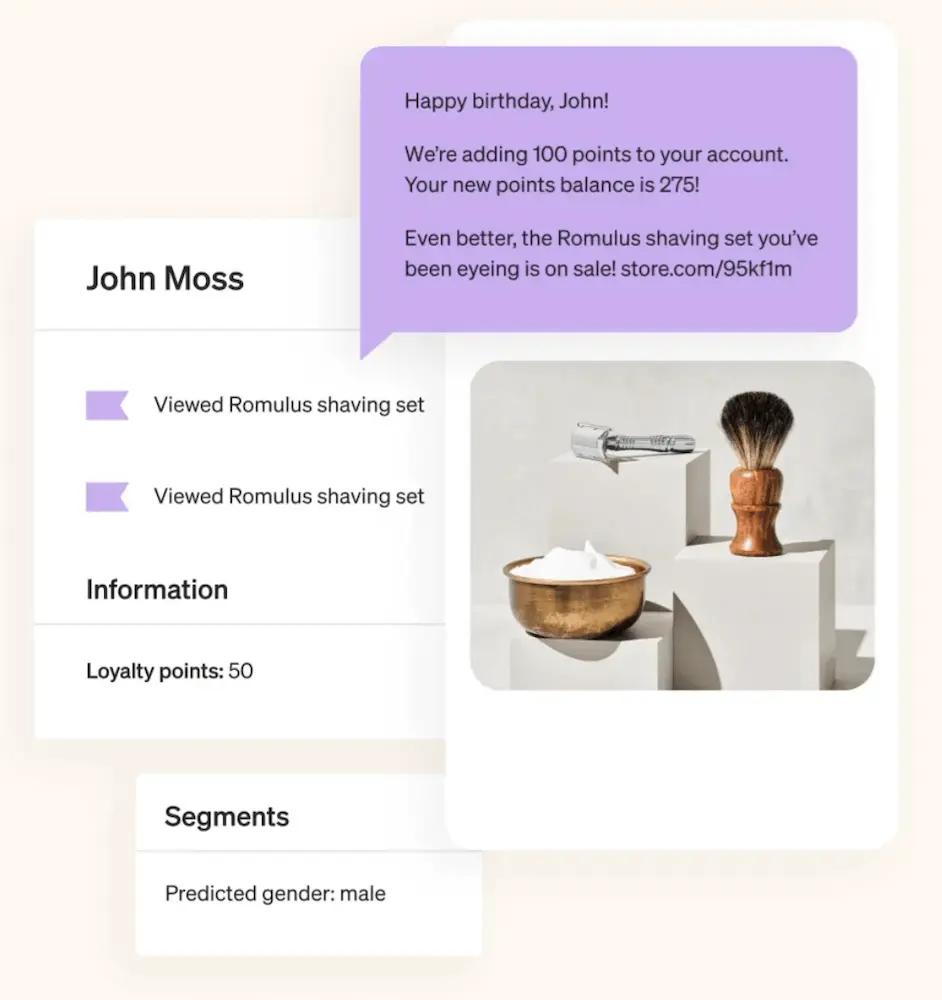
All of those strategies help foster a sense of exclusivity among your customers. “We try to be scrappy and stretch our pounds as much as we can,” Browne adds. “Klaviyo allows us to do that.”
Pro tip: If you ask for the year, not just the month and the day, you can use the birthday data you collect in future segmentation efforts for marketing based on generational shopping preferences.
Visit our help centre to learn how to create a birthday flow in Klaviyo.
3. Replenishment automations
If you sell products that buyers need to restock regularly, such as facial creams or coffee pods, replenishment flows are a great way to make sure your customers don’t forget to reorder when they’re about to run out—and end up buying from the convenience store down the road because they’ve run out of time to wait.
If it’s not right in front of my face, I’m probably not going to remember to go buy that thing.
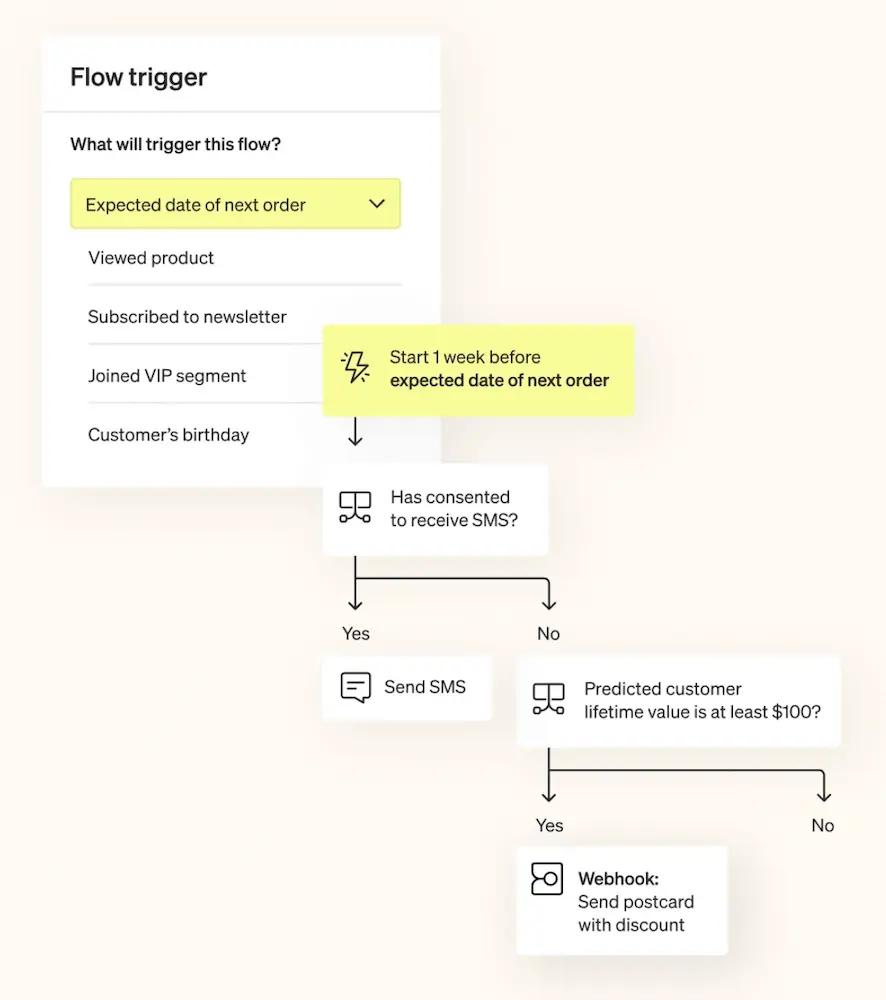
“If it’s not right in front of my face, I’m probably not going to remember to go and buy that thing,” Donahue points out. In Klaviyo, “we’re able to calculate, based on the data we have for sales, how often a customer is going to need that product, and then automatically send that reminder that literally gives them an easy button in their inbox.”
Pro tip: It may come as a surprise, but even if your brand doesn’t sell CPG items, you can still take advantage of a replenishment-style flow. Rely on Klaviyo’s predictive analytics to estimate when a customer is most likely to purchase again—and not necessarily the exact same item.
Gordon calls these types of flows “repeat purchase nurtures” because they send “whenever we expect you to make your next purchase,” he explains.
Visit our help centre to learn how to create a replenishment flow in Klaviyo.
4. Back-in-stock marketing automations
It’s hard to predict when supply chain issues may rear their ugly head, so “there’s a lot of money being left on the table if you aren’t taking advantage of back-in-stock flows,” Donahue says.
With back-in-stock automations, which are sent automatically to customers who sign up to be notified when a specific item becomes available again, you can make sure you never miss out on a sale—even if you’re facing stock shortages.
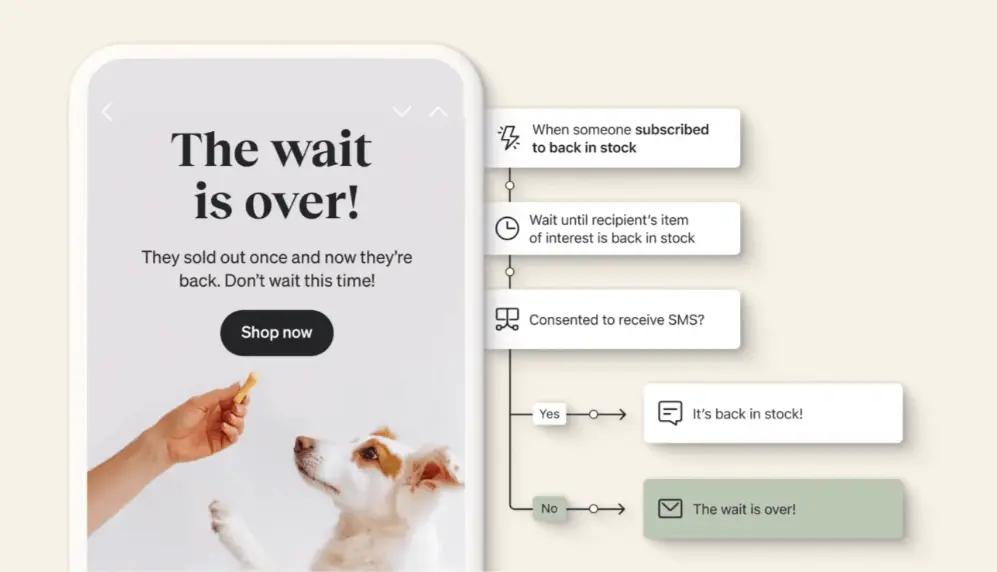
Pro tip: When setting these up, make sure you include minimum stock rules post-restock. You don’t want to send 100 customers a message that says, “Look what’s back—want to buy it?” if 90 of them might end up disappointed and frustrated, thinking, “I wish I could.”
With flash sales in particular, “things can go out of stock very quickly,” Browne cautions. “If you send an email promoting an out-of-stock product, that’s a huge inconvenience for the customer.”
If you send an email promoting an out-of-stock product, that’s a huge inconvenience for the consumer.
Visit our help centre to learn how to create a back-in-stock flow in Klaviyo.
5. Win-back automations
What if a customer doesn’t buy when you expect them to buy—or, worse, stops interacting with your brand altogether?
As long as they haven’t unsubscribed from your marketing, you might be able to reach them with a win-back automation: “our attempt at saving you from churning and never buying from us again,” Gordon explains.
A win-back automation targets inactive subscribers, or customers who have made a purchase, clicked on a marketing message, or visited your website in the past but not recently. What counts as an “inactive subscriber” depends entirely on your product lifecycle, but it generally means 3–6 months without engagement.
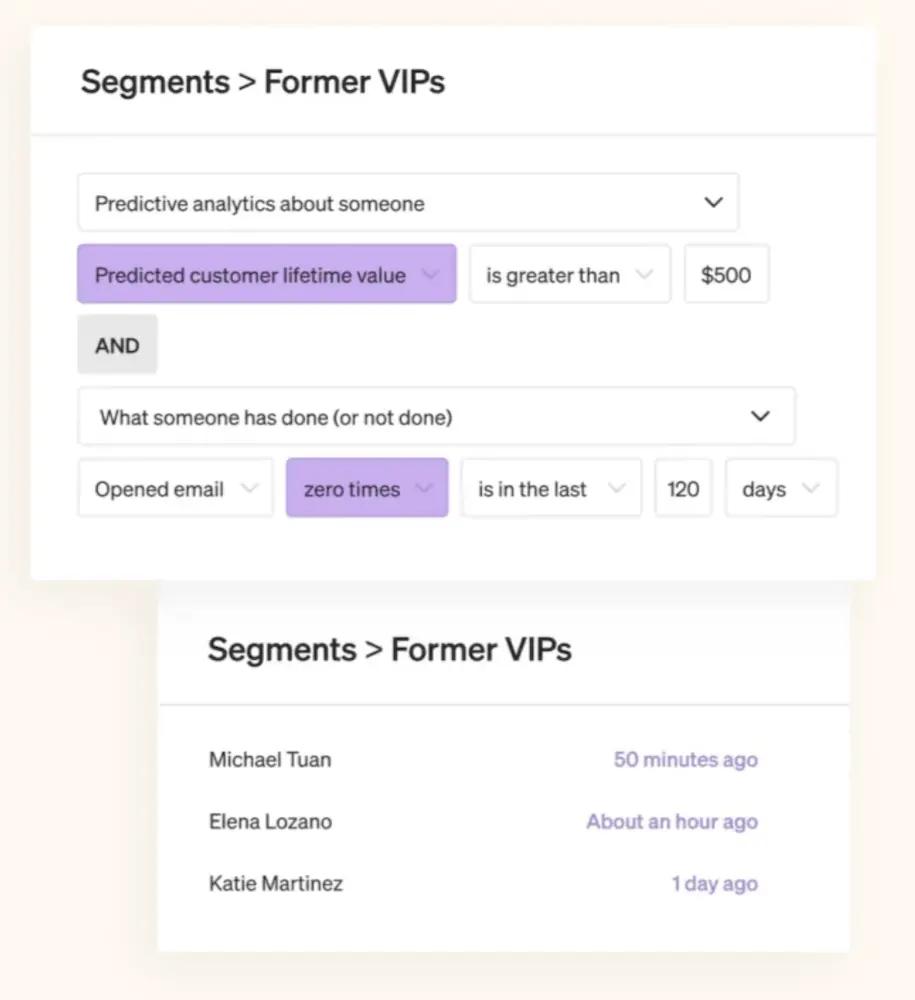
Pro tip: In Klaviyo, you can set up conditional splits based on how recently your customers have interacted with you. “If a customer has bought in the past but it’s been a while, you can give them a different offer from the one you might give someone who’s never purchased,” Gordon points out.
This type of shopper is “a worthwhile customer to win back because you know they’ve spent money with you already,” Gordon explains. Try enticing them with a discount, free delivery offer, or another incentive.
If a customer has bought in the past, but it’s been a while, you can give them a different offer than you might give someone who’s never purchased.
Visit our help centre to learn how to create a win-back flow in Klaviyo.
6. Standard automations, powered up
There’s always room for improvement, even with automations classified as “must-haves”. Gordon points to product-specific cart abandonment automations as one strategy for taking a core automation to the next level.
Check out the 5 core email automations every brand should implement—and see real examples in action.
Read full story“Instead of just showing the product feed image, the product title, the product price—all of those things that come with your standard abandoned cart template—we’ll build it out so there are different versions depending on what was in their basket,” Gordon explains.
Layla Sleep is a company that sells pillows, sheets, and other bedroom accessories, but its flagship products are its hybrid mattress and memory foam mattress—both of which cost around $1.5K.
“If you abandon one of those products in the basket, you get a product-specific, multi-part abandoned basket series that doesn’t look like an abandoned basket email—it looks like a campaign,” Gordon explains. “It shows that product’s lifestyle image, it’s got fun, well-written copy, and it includes reviews for the product you were specifically looking at.”
All of that’s been hugely successful. We see a way, way better conversion rate than we do with the generic version.
Plus, since financing is a major part of selling mattresses and Layla has Affirm set up on their website, “we can put in the product-specific Affirm pricing, too,” Gordon says. “So the email says, ‘As low as $89/month.’”
“All of that’s been hugely successful,” Gordon adds. “We see a far, far better conversion rate than we do with the generic version, for pretty obvious reasons.”
Visit our help centre to learn how to go even deeper with flows in Klaviyo:
- Guide to flow branching
- Understanding flow triggers and filters
- How to create a list-triggered flow
- Guide to creating a segment-triggered flow
- Guide to creating a metric-triggered flow
- Understanding the timing of a flow
- Troubleshooting a flow
7. Automations that combine both SMS and email
Email and SMS are both crucial components of your marketing mix—they’re just distinct channels that each serve a different purpose. Understanding consumer expectations around emails vs texts can help you fine-tune how you use them to reach prospects and customers.
When Klaviyo surveyed 5K European consumers about their SMS communication preferences with brands, we found that 35% of consumers want to receive less abandoned cart reminders through this medium. The same goes for low inventory alerts – save those messages for email .
The flows we want to set up are kind of a hybrid model.
By contrast, consumers want to receive more SMS messages from brands that contain transactional details such as delivery confirmations (64%), shipment confirmations (60%), and order confirmations (50%), as well as vouchers and promotional codes (50%) and birthday offers (39%).
In an ideal world, any automation you set up could use both email and SMS, depending on what each message in the sequence is trying to accomplish.
“The flows we want to set up are kind of a hybrid model,” Donahue says—perhaps a post-purchase flow incorporates order, shipment, and delivery confirmations via SMS, plus a “How to use your new product” email, for example.
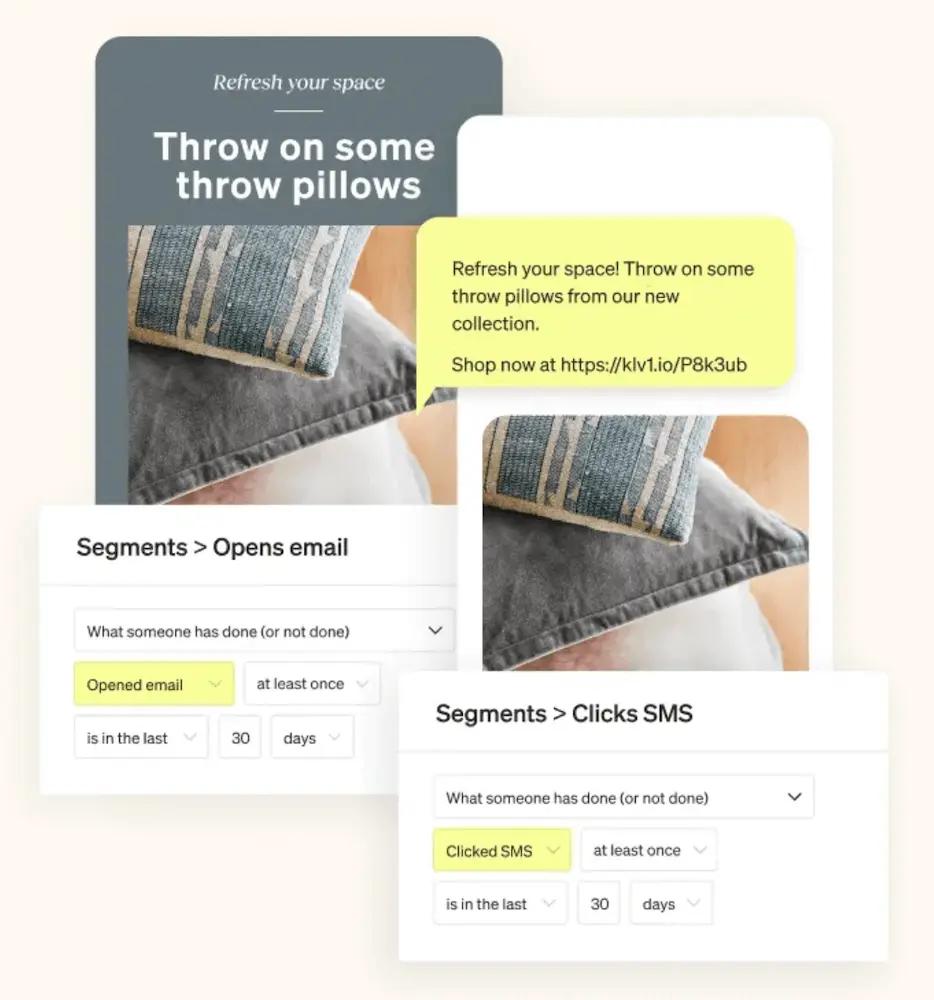
Ready to start incorporating SMS into your marketing automations? Here are 3 best practices to keep in mind:
Keep it short, sweet, and actionable
The fact that people are much more reluctant to give out their phone numbers than their email addresses is exactly why “SMS is a bit of a different beast” from email, Donahue says.
“SMS is more of a reminder system,” Donahue explains. “It certainly drives conversions, but it’s a quick flash. It’s not meant to provide a whole lot of content or context because you don’t have a whole lot of real estate to work with.”
SMS is more of a reminder system. It drives conversions, certainly, but it’s a quick flash. It’s not meant to provide a whole lot of content or context because you don’t have a whole lot of real estate to work with.
“Content-wise, SMS copy needs to be far more focused and efficient than email,” which offers more flexibility, Gordon agrees. “In a very small number of characters, you need to tell the customer why they should be excited, and then immediately shift the message’s focus to the CTA.”
That CTA, by the way, should send the customer as far down the funnel as possible—preferably directly to a shoppable category landing page or to a product detail page, because the tolerance for exploring a site from the homepage on mobile is especially low,” Gordon explains. “Help the user get where they’re going as quickly as possible.”
Respect people’s boundaries
SMS messaging is also “far more invasive than email messaging,” Gordon cautions — which means “you need to be much more careful with how frequently you send via that channel.”
You need to be much more careful with how frequently you send via SMS.
For high-intent automations such as welcome series and abandoned cart, “it still makes sense to send a burst of messages over a few days because the user has shown clear intent to purchase and you want to strike while the iron is hot,” Gordon says.
Otherwise, though, Gordon’s team finds that one message per week “is usually the sweet spot for SMS marketing.”
Remember as well: “It’s always best to stagger send times between the two channels,” Gordon adds. “This gives you two opportunities to get the click through to the website” — and it also shows respect for consumers’ privacy, many of whom (39%) will unsubscribe if they receive the same message by both email and SMS, according to our survey.
It’s always best to stagger sends timing-wise between the two channels. This gives you two opportunities to get the click onto the website.
Run SMS from the same platform as email
Although Noticed is platform-agnostic when it comes to SMS, the agency only does email marketing work on Klaviyo—and they strongly recommend Klaviyo SMS because of how much sense it makes to combine email and SMS within the same marketing automation software.
Why? For starters, “if you have them set up on different platforms, you’re going to get double attribution constantly,” Gordon explains. “That becomes a huge problem because you can’t really trust your numbers at that point. Klaviyo, having them both under the same roof, is able to say which one happened most recently.”
If you have email and SMS set up on different platforms, you’re going to get double attribution constantly. That becomes a huge problem because you can’t really trust your numbers at that point.
Second, don’t underestimate the impact of being able to view both SMS and email data “side by side within the analytics tool of the platform,” Gordon says. “If they’re on different platforms, it can get very difficult to jump between them and try to make comparisons. That gets out of control very quickly and it’s simply not scalable. It’s not an effective use of time.”
Imagine you’re putting together a major Black Friday/Cyber Monday flow that involves both email and SMS messages.
As Gordon explains, “when we want to compare email and SMS against one another, and see which channel these customers prefer and what kind of engagement rates we’re getting across each, that’s super easy to do when it’s all under the same roof in Klaviyo.”
When we want to compare email and SMS against one another, and see which channel these customers are preferring and what kind of engagement rates we’re getting across each, that’s super easy to do when it’s all under the same roof in Klaviyo.
Want to go beyond marketing automation examples? In this series, we cover everything you need to know about building and executing a smart, effective marketing automation strategy. Check out:
- Why marketing automation that prioritises personalisation is non-negotiable
- How to set up a strong marketing automation strategy
- Marketing automation KPIs for measuring and optimising your marketing efforts
Power smarter digital relationships with Klaviyo SMS
Get started